





By: Surjit Singh Flora
BRAMPTON, Ontario – In a decisive pivot aimed at reshaping the future of public safety and victim advocacy, the Canadian government has officially enacted the Bail and Sentencing Reform Act. Known as Bill C-14, the legislation introduces over 80 targeted changes to the Criminal Code, marking one of the most significant overhauls of the nation’s justice system in recent history.
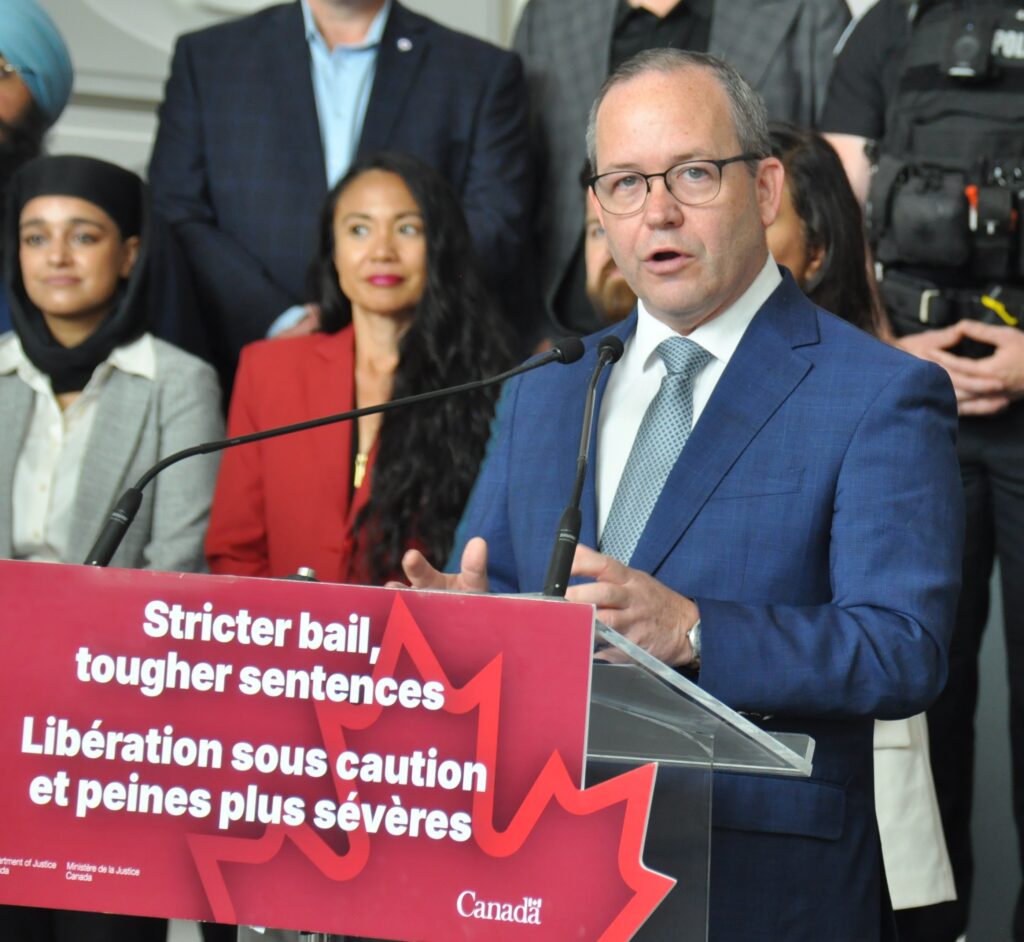
This week, a high-profile press conference at Brampton City Hall celebrated the sweeping reforms that received Royal Assent. The gathering brought together a formidable coalition of federal, provincial, and municipal leaders, alongside top-ranking law enforcement officials, to herald a new era of criminal justice—one that promises to be stricter on repeat violent offenders while prioritizing the safety of victims and marginalized communities.
Bill C-14 is part of a broader legislative trifecta passed this week, functioning alongside new laws designed to strengthen protections against hate crimes, better protect victims and survivors, and shield children from sexual predators. Together, these measures signal a forward-looking, equitable approach to justice—a “gender future” framework that explicitly recognizes how intimate partner violence and systemic failures disproportionately affect vulnerable populations.

A Catalyst Born of Tragedy
For Brampton Mayor Patrick Brown, the passage of Bill C-14 is not merely a political victory; it is a deeply personal milestone for his community. Standing alongside the Honourable Sean Fraser, Minister of Justice and Attorney General of Canada, Brown reflected on the human cost of a justice system that had previously fallen short.
Brown traced the city’s relentless advocacy back to the July 2020 murder of Darien Henderson-Bellen, whose death became a tragic emblem of the system’s flaws. An individual with a documented history of violence killed Henderson-Bellen, having been granted bail multiple times and repeatedly breaching release conditions.
“Her death devastated her family, shocked our community, and became a catalyst for change,” Brown said, recalling the launch of the city’s Bail Reform Now petition. For years, advocates have pointed out that the judicial “revolving door” acutely endangers women and those facing gender-based violence. By tightening bail conditions, the new legislation takes a crucial step toward a future where the justice system proactively shields victims of intimate partner violence rather than leaving them exposed to known threats.
“Our residents have been clear,” Brown added. “They want a justice system that protects victims, prioritizes public safety, and holds serious offenders accountable.”
Targeting the Roots of Organized Crime
The press conference featured a heavy presence from Canada’s top policing brass, underscoring the operational impact of the new laws. Attendees included Clayton Campbell, President of the Toronto Police Association; Thomas Carrique, Commissioner of the Ontario Provincial Police and President of the Canadian Association of Chiefs of Police; Bryan Larkin, Senior Deputy Commissioner of the RCMP; Patrick Flannery, Board Director of the National Police Federation; and Nick Milinovich, Deputy Chief of the Peel Regional Police.
Ruby Sahota, Secretary of State for Combatting Crime, opened the proceedings by framing the government’s strategy through three core pillars: strengthening criminal laws, supporting frontline law enforcement, and investing in long-term crime prevention.
Sahota highlighted the tangible successes already materializing on the ground, particularly concerning the recent surge in auto thefts that has plagued the Greater Toronto Area (GTA). “I’m excited to report that we’ve seen a decrease in auto theft in Ontario of about 40 percent,” Sahota announced, calling it a “big victory.”
However, she stressed that Bill C-14 provides the necessary tools to drive those numbers down further and tackle the growing threats of extortion and organized crime. “These crimes are serious threats to public safety and ones that line the pockets of organized crime groups, whether that be street gangs or sophisticated transnational networks,” she noted.
Reverse Onus and Collaborative Governance
At the heart of Bill C-14 are new “reverse onus” provisions and tougher sentencing measures. Under a reverse onus, the burden of proof shifts: rather than the Crown having to prove why an accused person should be detained, the accused must demonstrate why they should be released on bail. This targets individuals with a history of violent offences, particularly those involving firearms, organized crime, or intimate partner violence.
Mayor Brown praised the collaborative nature of the federal response, explicitly thanking Minister Fraser, Secretary Sahota, and Prime Minister Mark Carney for their willingness to listen to municipal and law enforcement leaders.
“I have to say how refreshing it was when we were drafting this legislation; he [Fraser] took time to sit down with the Peel Regional Police, invite us up to his office in Ottawa to share input and share concerns,” Brown said. We felt you understood the issue and would bring meaningful change to it, which so many of our residents care about.
Taking the podium to conclude the initial remarks, Minister Fraser acknowledged the frontline officers standing behind him and confirmed the immediate impact of the collaborative effort. “Bill C-14, the Bail and Sentencing Reform Act, has now become law in Canada,” Fraser stated, cementing the government’s commitment to immediate action.

Looking to the Future
While the mood at Brampton City Hall was triumphant, officials were quick to note that legislation alone is not a panacea. A truly equitable and effective justice system requires sustained investment.
As Brown cautioned, the successful implementation of Bill C-14 will demand continuous collaboration across all levels of government. “It will require adequate resources for policing, prosecution services, courts, victim supports, bail supervision programs, and correctional facilities,” he said.
As Canada steps into this new legal reality, the passage of Bill C-14 represents more than just a tightening of the Criminal Code. It reflects an evolving, progressive understanding of public safety—one that honours victims like Darien Henderson-Bellen by ensuring the legal framework of the future protects the fundamental right of all citizens, across all genders and communities, to live free from the threat of preventable violence.