

Sri Lanka President Gotabaya Rajapaksa on Monday appointed a new cabinet consisting of 17 ministers amid the ongoing anti-government protests in the island nation following the economic and political crisis.
According to reports coming out of Sri Lanka, the size of the cabinet has been reduced to ensure the smooth functioning of the government.
The president’s elder brother, Mahinda Rajapaksa, however, remains prime minister.
“Seventeen new cabinet ministers were sworn in before President Gotabaya Rajapaksa at the President’s Secretariat today morning,” a statement from the president’s office said.
Only five members of the previous cabinet were sworn in again, while most of the other portfolios were allocated to members of the ruling Sri Lanka Podujana Peramuna.
“The Cabinet portfolios held by the President and Prime Minister have not changed,” the statement said.
Besides Mahinda Rajapaksa, no other member of the family is in the new cabinet. Another two of the president’s brothers, Basil and Chamal Rajapaksa, and the prime minister’s son, Namal Rajapaksa, were part of the outgoing cabinet, and were not re-appointed.
The entire Sri Lankan Cabinet resigned in the first week of April due to massive anti-government protests.
An opposition party in Sri Lanka opposed the decision of the President to appoint a new Cabinet with inexperienced ministers.
Sri Lankan Parliament is going to meet on April 19 with new Cabinet ministers while the Opposition is likely to step up pressure on the back of the mounting protests.
In the last Parliament session, ruling party MPs had said, “President is not going to resign from his post before completing his tenure.”
Another two of the president’s brothers, Basil and Chamal Rajapaksa, and the prime minister’s son, Namal Rajapaksa, were part of the outgoing cabinet, and were not re-appointed.
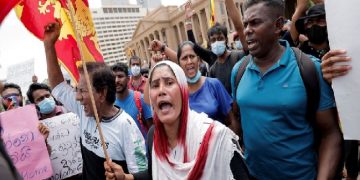
Thousands of Sri Lankans have been protesting outside the president’s office in the commercial capital Colombo for over a week, asking for the Rajapaksas to quit government.
Economic mismanagement by successive governments weakened Sri Lanka’s public finances, but the situation was exacerbated by deep tax cuts enacted by the Rajapaksa administration soon after it took office in 2019.
Key sectors of the economy, particularly tourism, where then battered by the COVID-19 pandemic, and the government dragged its feet on approaching the IMF for help.
Last week, the country’s central bank said it was unilaterally suspending external debt payments, instead of using the paltry foreign reserves of around USD 1.93 billion for importing essential goods.
Rajapaksa’s government is set to begin talks with the International Monetary Fund (IMF) on Monday for a loan programme, and analysts have flagged political instability as a risk in Sri Lanka finding a way out of financial turmoil.