

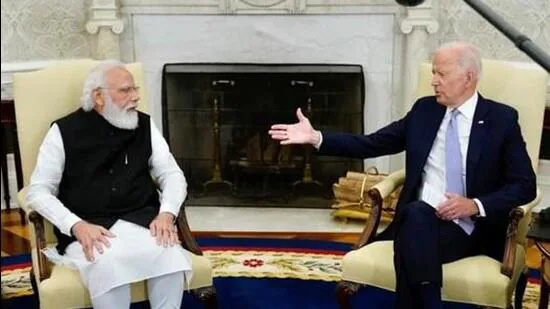
The meeting will be held against the backdrop of differences between the two sides on the conflict in Ukraine and its fallout on the world order. In a rare expression of these differences, Biden said last month the world had mounted a “united front” on the Russian aggression against Ukraine while India had been “somewhat shaky” within the Quad.
“The virtual meeting will enable both sides to continue their regular and high-level engagement aimed at further strengthening the bilateral Comprehensive Global Strategic Partnership,” the external affairs ministry said in a brief statement.
White House spokesperson Jen Psaki said Biden intended to use the meeting to “continue our close consultations on the consequences of Russia’s brutal war against Ukraine and mitigating its destabilising impact on global food supply and commodity markets”.The virtual meeting will precede the fourth India-US 2+2 dialogue of defence and foreign ministers on the same day. Defence minister Rajnath Singh and external affairs minister S Jaishankar are set to meet their US counterparts Lloyd Austin and Antony Blinken in Washington.
Modi and Biden will review ongoing bilateral cooperation and exchange views on recent developments in South Asia and the Indo-Pacific and global issues of mutual interest, the external affairs ministry said.
Psaki said the meeting between Biden and Modi will deepen ties “between our governments, economies, and our people”, and the two leaders will discuss cooperation on a range of issues, including ending the Covid-19 pandemic, countering the climate crisis, strengthening the global economy and upholding a free, open, rules-based international order to bolster security, democracy, and prosperity in the Indo-Pacific.The two leaders will also advance conversations about developing an Indo-Pacific Economic Framework and delivering high-quality infrastructure, she added.
Biden last spoke to Modi and other leaders of the Quadrilateral Security Dialogue or Quad during a virtual summit in March.
The US and its European allies have been nudging India to change its position on the Ukraine crisis. During a recent visit to New Delhi, US deputy national security adviser Daleep Singh said the US doesn’t want to see a “rapid acceleration” in India’s imports from Russia of energy and other commodities and cautioned that there will be consequences for countries which attempt to circumvent Western sanctions.
India has consistently called for an end to hostilities in Ukraine and a return to the path of dialogue and diplomacy. Modi has raised the need for an immediate ceasefire and talks to end the conflict during his conversations with Russian President Vladimir Putin and Ukrainian President Volodymyr Zelenskyy.Jaishankar told Parliament last week that India is currently focused on stabilising its economic relations with Russia against the backdrop of Western sanctions, and emphasised that no “political colouring” should be attributed to its decisions to take up Russia’s offer of oil and other commodities at discounted rates. He also noted that European countries were continuing to buy energy and fertilisers from Russia