


By: Surjit Singh Flora
On Oct. 26, Torontonians will choose a mayor. We see this election as a chance to debate more than personalities. It is a chance to decide what a vibrant, diverse, creative, and increasingly strained city should expect from its government.
Traffic barely moves, TTC service is unreliable, property taxes and rents keep rising, people sleep outdoors, and public works projects often lack clear completion dates. The next mayor should set measurable goals for transportation, housing, homelessness, and accountability. Every major promise should include a cost, a timeline, and a named partner.
Transportation is an economic issue. Time lost in traffic means missed shifts, late deliveries, fewer customers, and less time with family. Toronto can’t build its way out of congestion, but it can make travel more predictable.
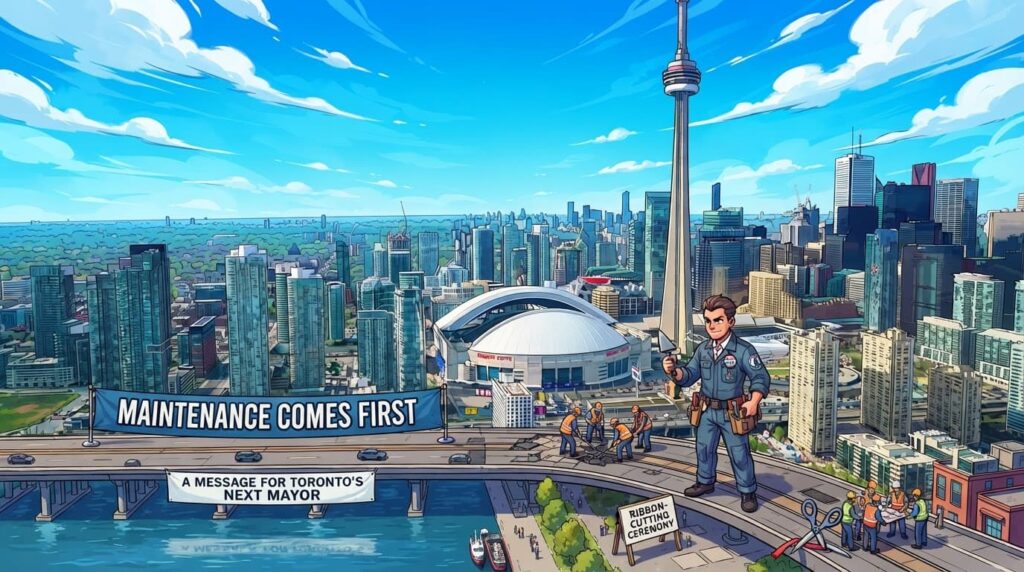
Maintenance should come before ribbon cutting. The city’s 2026 to 2035 capital plan totals $63.1 billion, including $33.4 billion to repair existing infrastructure. At the same time, Toronto’s broader infrastructure funding gap could reach $26 billion over the next decade. Roads, bridges, water systems, tracks, signals, and transit stations must work before city hall announces another grand project.
The Gardiner Expressway needs disciplined rehabilitation, as do major roads and TTC assets. Ontario has committed $73 million to accelerate Gardiner work, while the federal government has provided $183.95 million for TTC projects, including bus overhauls, surface tracks, subway tracks, and signal upgrades.
Toronto also needs one public construction map showing project dates, lane closures, responsible agencies, and penalties for missed deadlines. Utility cuts, track repairs, fibre installation, development, and resurfacing shouldn’t close the same corridor at once. Where safety and noise rules allow, disruptive work should happen overnight or on weekends. Traffic signals should respond to real conditions rather than fixed schedules.
Bike lanes should be assessed individually. Some are poorly designed or disconnected, but safe routes can reduce car trips when they connect homes with schools, workplaces, and transit. Decisions should rely on travel data, collision records, freight access, and local business needs.
The TTC requires stronger oversight. Public reliability targets, clear incident reports, and executive accountability would give riders a fair measure of performance. Council appoints the TTC board, while the province controls major transit projects and funding. The mayor should explain that division of responsibility honestly instead of taking credit for decisions controlled elsewhere.
Housing remains Toronto’s central long-term challenge. High rents and property taxes displace residents, strain household budgets, and push people toward shelters and encampments. Construction matters, but new homes alone can’t address addiction, mental illness, or the poverty that leaves people unable to keep a room.
In October 2025, 12,196 people experienced homelessness in Toronto. Shelters averaged about 95 per cent occupancy, and in June 2026, an average of 273 people were turned away each night. Toronto needs supportive housing, staffed shelter beds, and direct routes into permanent homes. Outreach teams should include clinicians, addiction workers, housing staff, and people with lived experience. Treatment must be easier to access than street drugs, and housing workers should stay connected after people leave shelters.
Police should target repeat violent offenders and organized theft networks, including those involved in gun crime, vehicle theft, break-ins, and bike theft. Police can’t replace housing or mental-health services, so crisis teams must respond to people in distress.
Toronto also needs more homes in established neighbourhoods, particularly near frequent transit. Fourplexes, fiveplexes, and sixplexes should have clear rules and faster approvals. Public dashboards should report application timelines, approved units, affordability commitments, and construction starts.
Ontario’s $1.5-billion development-charge program requires Toronto to cut residential development charges by 40 per cent to 60 per cent through 2029. That funding could support tens of thousands of homes, but the city should publicly report where they are built and what infrastructure new residents require. Toronto should also expand its vacant home tax, enforce short-term rental rules and seek stronger tools against speculative ownership.
City hall manages about 60 per cent of the infrastructure residents use but receives roughly 9 per cent of tax revenue. Property taxes can’t cover every road, shelter, and transit obligation. Stable support from Queen’s Park and Ottawa is necessary, with scorecards tracking funding, scope, completion dates, and long-term operating costs.
Cost control shouldn’t strip Toronto of its parks, libraries, public washrooms, safe stations, and gathering places. Arts, culture, universities, food, film, music, design, and immigrant-owned businesses are also part of the city’s economy. Reliable transit and affordable housing allow artists, researchers, builders, and entrepreneurs to remain here.
Toronto will always be complicated. Its mayor can still make costs clearer and services more dependable, while the province and federal government hold major funding and policy powers. Toronto will remain messy; the mayor can be more honest about what improvement costs and far better at delivering it.